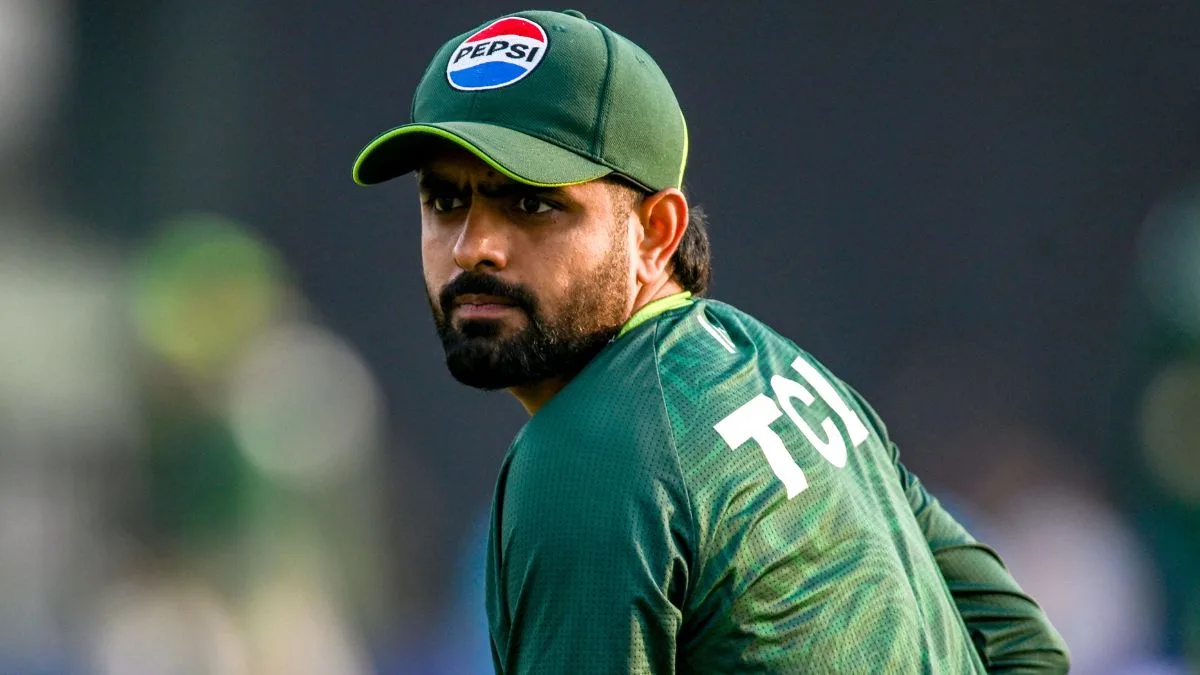
Former Pakistan captain Babar Azam has made it clear that he has no intention of stepping away from any format of the game, insisting that it is not a player’s role to decide what to skip but to be ready to play whenever required.
Babar, who has been a key figure for Pakistan across formats for years, has faced a lean patch recently, struggling to score consistently. His form also dipped during the ICC Men’s T20 World Cup earlier this year, where he failed to make a significant impact with the bat.
Advertisement
However, the 31-year-old found form again in the Pakistan Super League (PSL), leading Peshawar Zalmi to the title. He finished as the tournament’s top scorer, amassing a record-equalling 588 runs in 11 matches, including two centuries.
Speaking after the PSL triumph, Babar reiterated his commitment to all formats of the game.
“My focus is on all three formats. It’s not for the player to decide (which format to skip); a player’s job is to play. In my opinion, every player should play every form of cricket. You shouldn’t focus only on the white ball or T20s. Red-ball cricket gives you immense experience. It teaches you how to build an innings and gives you patience,” he said.
“When you play four-day cricket or any domestic circuit, you gain the experience of scoring ‘long’ runs. You should play all three formats because each one helps the other. Red ball helps you in T20s and ODIs. When you play Test matches, the patience and mindset you develop, the art of playing a long innings—benefit you significantly in white-ball cricket,” he added.
Babar is expected to continue his run in the upcoming two-match Test series against Bangladesh, starting Friday. His recent record in Test cricket has been underwhelming, with his last century in the format coming in December 2022.
His struggles in white-ball cricket before the PSL were also evident, with just one half-century this year, which came in a T20I against Australia in early February ahead of the T20 World Cup.
Reflecting on his dip in form, Babar acknowledged that such phases are part of a batter’s journey and stressed the importance of self-assessment and support systems.
“I was not up to my own expectations, but it is normal for a batter to struggle with his execution. You have to take a few steps back and assess where you are going wrong and correct it. You need support in such times, and my family and close friends kept me motivated.
“I discussed the areas of improvement with the coaches who are close to me and worked on them. Life is like a rollercoaster, and things never stay the same. You learn from your good and bad experiences. That is how life goes,” he added.